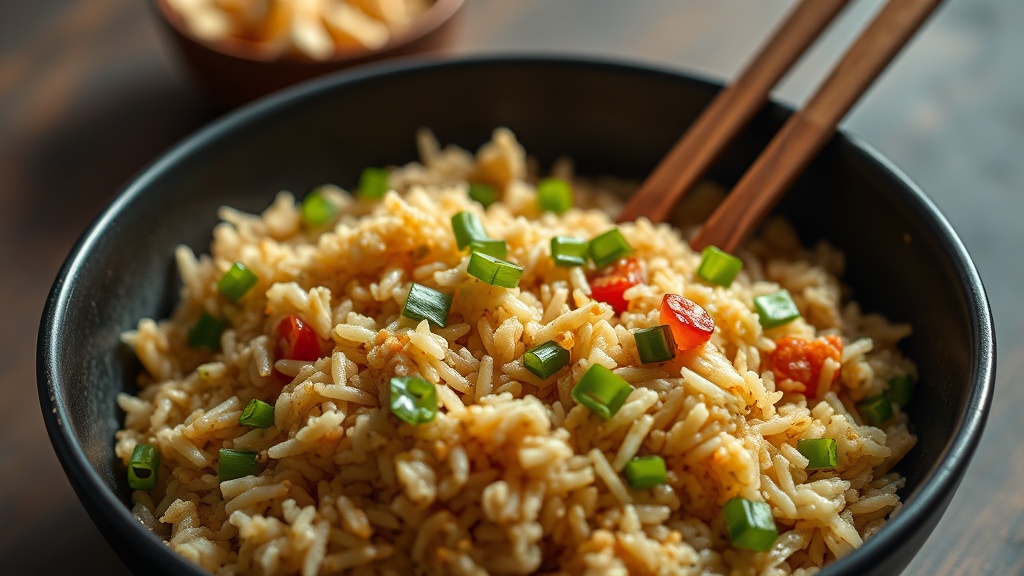
How to Turn Leftover Rice Into a Quick 15-Minute Fried Rice Dinner

Leftover rice sitting in the fridge doesn't have to mean another boring microwave reheat. This guide walks through exactly how to turn cold, day-old rice into a quick 15-minute fried rice dinner that feeds a hungry family without draining the grocery budget. You'll learn the one trick that separates soggy rice from restaurant-style grains, a flexible formula for mixing proteins and vegetables, and how to season with pantry staples instead of buying specialty sauces.
Why Does Day-Old Rice Work Better for Fried Rice?
Day-old rice works better because the starches in refrigerated rice recrystallize and firm up, which keeps each grain separate when it hits the hot pan. Freshly cooked rice is too soft and steamy — it clumps together and turns mushy before it ever gets that golden, slightly crispy texture. (Think of it like breading day-old bread for French toast — the slight staleness is actually an advantage.)
Here's the thing: you don't need to wait a full 24 hours. Spread freshly cooked rice on a sheet pan, pop it uncovered in the fridge for 20 to 30 minutes, and it'll fry up just fine. The goal is to get the surface moisture out so the grains can sear instead of boil in their own steam.
What Ingredients Do You Need for 15-Minute Fried Rice?
You need rice, oil, aromatics, protein, vegetables, eggs, and a simple sauce — most of which are probably already in the kitchen. The beauty of fried rice is that it's a template, not a rigid recipe. That said, certain ingredients do make the process smoother and the final dish taste more like takeout.
The Non-Negotiables
- Cold, cooked rice: About 4 cups works for a family of four. Long-grain white rice (like Mahatma or Jasmine) is the classic choice.
- Cooking oil with a high smoke point: Vegetable, canola, or peanut oil holds up to high heat without burning.
- Soy sauce: Regular or low-sodium both work — just taste as you go.
- Eggs: Two or three, scrambled quickly in the pan before everything else goes in.
The Flexible Add-Ins
Protein can be whatever's on hand — diced leftover chicken, a couple of chopped hot dogs, a can of drained tuna, or frozen shrimp thawed under cold water. Vegetables follow the same rule: frozen peas and carrots are a classic combo, but diced bell peppers, shredded cabbage, or even leftover roasted broccoli all work. The catch? Everything needs to be cut small so it cooks in minutes and fits on a spoon.
| Ingredient Type | Budget Option | Upgrade Option | Notes |
|---|---|---|---|
| Rice | Store-brand long-grain white | Nishiki or Kokuho Rose short-grain | Short-grain is stickier but fries beautifully when cold |
| Oil | Store-brand vegetable oil | Kadoya pure sesame oil | Use sesame oil as a finishing drizzle, not for frying |
| Soy Sauce | La Choy or Kikkoman regular | Kikkoman less sodium or tamari | Tamari is gluten-free and slightly richer |
| Protein | Frozen diced ham or hot dogs | Wild-caught shrimp or flank steak | Leftover rotisserie chicken is the middle-ground winner |
| Veggies | Frozen peas and carrots | Fresh snap peas, baby corn, water chestnuts | Keep pieces bite-sized for even cooking |
What's the Best Pan for Making Fried Rice at Home?
A large, heavy skillet or wok over the highest heat source in the kitchen is the best pan for making fried rice at home. The wide surface area lets ingredients spread out and sear instead of steaming in a crowded pot. A 12-inch Lodge cast-iron skillet or a carbon-steel wok both conduct and hold heat well — which matters because cold rice sucks heat out of the pan fast.
If the only option is a non-stick skillet, it'll still work. Just don't crank the heat as high, and work in smaller batches so the pan temperature doesn't drop too much. A little patience beats a scorched Teflon coating every time.
How Do You Make Fried Rice in 15 Minutes?
You make fried rice in 15 minutes by prepping every ingredient before the pan ever touches the burner, then cooking in quick, sequential stages over high heat. This is not a "chop as you go" kind of dinner — mis en place (having everything ready) makes the difference between a relaxing 15 minutes and a frantic, burnt mess.
- Prep everything. Dice protein into small cubes. Chop vegetables uniformly. Scramble eggs in a bowl with a pinch of salt. Mix the sauce — typically 3 tablespoons soy sauce, 1 teaspoon sugar, and a splash of rice vinegar or plain white vinegar.
- Scramble the eggs. Heat 1 tablespoon of oil in the skillet over medium-high heat. Pour in the eggs, let them set for 10 seconds, then scramble quickly until just cooked. Slide them onto a plate and set aside.
- Cook the protein. Add another tablespoon of oil, turn the heat to high, and sear the protein until it's browned and heated through. (If using raw meat, cook it fully. If using leftovers, you're just warming and adding color.) Remove to the same plate as the eggs.
- Stir-fry the vegetables. Toss in a bit more oil if the pan looks dry. Add harder vegetables first — carrots, bell peppers, broccoli stems — and cook for 2 minutes. Then add quick-cooking vegetables like peas, corn, or leafy greens.
- Add the rice. Dump the cold rice straight into the hot pan. Break up any clumps with the back of a spatula. Let it sit for 30 seconds without stirring so the bottom layer gets a little crispy.
- Season and combine. Pour the sauce around the edges of the pan (it sizzles and caramelizes faster there) and toss everything together. Add the eggs and protein back in. Stir-fry for another 1 to 2 minutes until everything is coated and hot.
- Finish and serve. Taste for salt. A drizzle of toasted sesame oil at the very end adds depth without costing much. Serve straight from the pan.
Pro tip: If the rice is sticking to the pan, the heat is too low or the pan is too crowded. Push everything to one side, add a tiny splash of oil to the empty space, and let the pan reheat before tossing again.
How Can You Make Fried Rice Taste Like Takeout?
The secret to takeout-style flavor is a combination of high heat, enough fat, and a pinch of sugar in the sauce. Restaurant woks burn incredibly hot — home stoves can't match that — but a screaming-hot cast-iron pan gets close enough. The sugar in the sauce caramelizes slightly against the hot metal, creating that familiar savory-sweet glaze.
Another trick? Use a little Lee Kum Kee oyster sauce or Koon Chun hoisin alongside the soy sauce. Even half a tablespoon deepens the flavor without making the dish taste obviously like either sauce. Worth noting: msg (sold as Accent) is perfectly safe to cook with and adds that unmistakable savory punch — but a splash of fish sauce or a sprinkle of nutritional yeast works too if that's what's in the cabinet.
Finally, don't skip the aromatics. Garlic and ginger — fresh or the jarred kind from the produce section — fried for 30 seconds in hot oil before the protein goes in, builds a flavor base that transforms plain rice into something craveable.
What Are the Best Leftover Add-Ins for Fried Rice?
Almost any leftover from the previous three days can find a home in fried rice — as long as it's safe to eat and chopped small. The best add-ins are proteins and vegetables that already have some seasoning, because they layer extra flavor into the dish without extra work.
Leftover roasted chicken shreds beautifully and stays tender. Diced breakfast sausage or crumbled bacon adds smokiness. Even leftover stir-fry vegetables can go straight back into the pan. The catch? Avoid anything overly saucy or wet — like leftover curry or stew — because excess liquid will turn the rice gummy.
Here's a quick reference for what works and what doesn't:
- Great: Rotisserie chicken, baked salmon, pork chops, roasted Brussels sprouts, grilled zucchini, steamed green beans
- Good with caution: Mashed potatoes (use sparingly, almost as a binder), leftover mac and cheese (weird but not impossible — dice the pasta small)
- Skip it: Soupy casseroles, creamed vegetables, anything with a heavy mayonnaise base
How Do You Store and Reheat Fried Rice?
Leftover fried rice keeps in the fridge for up to 3 days in a tightly sealed container. Cool it quickly — spread it in a thin layer if possible — and refrigerate within two hours of cooking. For reheating, a hot skillet with a tiny splash of oil brings back the best texture. The microwave works in a pinch; just cover the bowl with a damp paper towel and stir halfway through so it heats evenly.
Fried rice also freezes surprisingly well. Portion it into freezer bags, press out all the air, and lay flat in the freezer. It'll keep for about a month. Thaw overnight in the fridge or break off chunks and reheat straight from frozen in a hot pan with a lid for the first few minutes.
At the end of a long day, a container of cold rice and a few odds and ends from the crisper drawer are all it takes to get a hot, filling dinner on the table. No fancy techniques. No expensive ingredients. Just a hot pan, a little oil, and the freedom to use what you've already got.
Steps
- 1
Scramble the Eggs and Prep Your Add-Ins
- 2
Sauté Aromatics and Vegetables in a Hot Pan
- 3
Toss in the Rice, Season, and Stir-Fry Until Crispy